
What is Organizational Structure and Which One is Right for Your Business
The right organisational structure can unlock growth. The wrong one can silently strangle it. Here is how to choose wisely for your Indian SME.
Business Strategy | 7 Min Read | By OneWill Consulting Group
H1: Organisational Structure – What It Is and Which One Your SME Actually Needs
Every growing business hits the same invisible wall. Decisions slow down. Accountability blurs. Everyone reports to the founder and the founder is drowning. This is not a people problem. It is a structure problem. The way your business is organised – who reports to whom, who owns what, how decisions get made – determines how fast and how far you can grow.
What You Will Learn:
-
- What organisational structure really means for your business
-
- The four main types of structures and how each works
-
- Which structure suits your SME at different stages of growth
-
- The warning signs that your current structure is holding you back
What is Organisational Structure, And Why It Matters for SMEs?
Organisational structure is the framework that defines how roles, responsibilities, and authority are arranged inside your business. It determines who reports to whom. It defines how communication flows. It decides where decisions get made.
Think of it as the skeleton of your business. You cannot see it from the outside. But without it, nothing stands upright.
Most Indian SMEs start with an informal structure. The founder runs everything. A few trusted people handle operations. Everyone figures out the rest. This works at ₹1–2 crore turnover. It breaks down at ₹10 crore and above.
As your business grows, your structure must grow with it. A structure built for 10 people will actively damage a 50-person organisation.
Type 1: Flat Structure 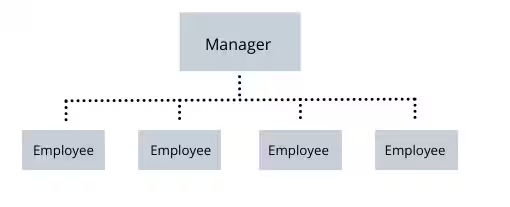
In a flat structure, there are very few layers between the founder and the employees. Everyone has direct access to leadership. Decisions are fast. Communication is open.
This works well for startups and early-stage SMEs with fewer than 20 people. It encourages ownership and initiative.
The problem comes with scale. When you have 40 or 50 people, the founder cannot manage everyone directly. The flat structure becomes a bottleneck. Every decision waits for one person- you.
If your team constantly comes to you for approvals on routine matters, your flat structure has outgrown its usefulness.
Type 2: Functional Structure 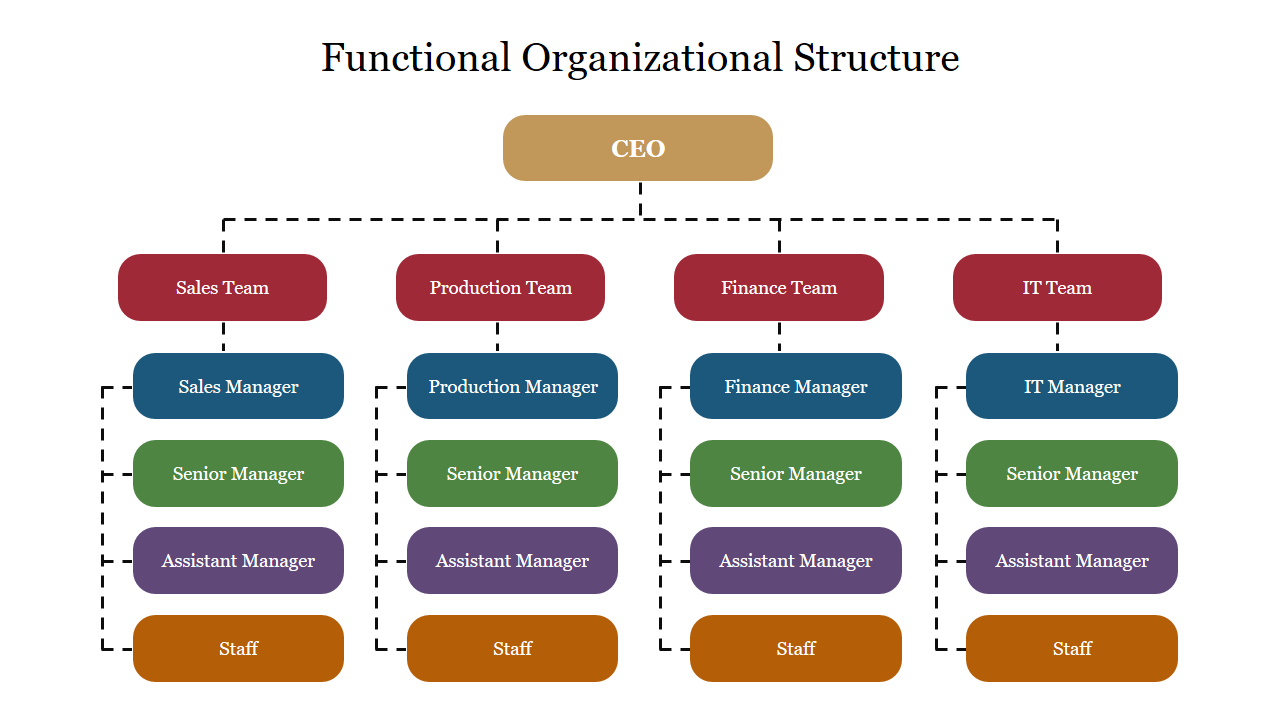
In a functional structure, employees are grouped by function. Sales, Marketing, Operations, Finance, HR – each becomes a separate department with its own head.
This is the most common structure for Indian SMEs in the ₹5–50 crore range. It creates clear ownership. Each department head is accountable for their area. Specialisation improves. Efficiency increases.
The challenge is cross-functional collaboration. The sales team and the operations team may not communicate well. Silos form. The founder still ends up mediating between departments.
This structure works best when you have strong, experienced department heads who can manage their teams independently.
Type 3: Divisional Structure 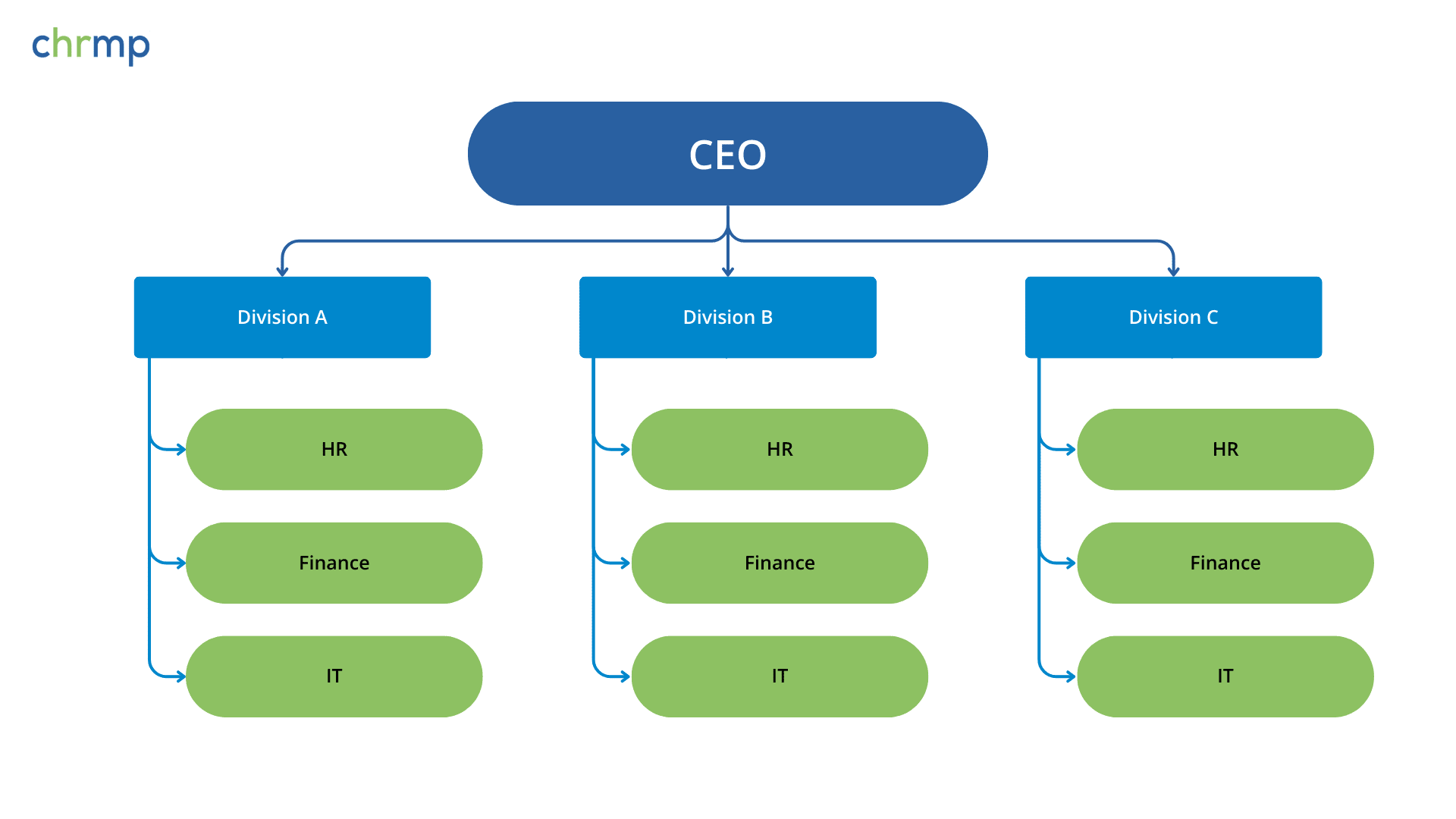
In a divisional structure, the business is organised around products, geographies, or customer segments. Each division operates almost like a separate business unit with its own resources and leadership.
This suits larger SMEs with multiple product lines or businesses operating across several cities, say, a manufacturer in Ahmedabad with separate divisions for domestic sales, exports, and retail.
Each division has autonomy. This drives accountability and speed within each unit.
The downside is duplication. Each division may have its own HR, finance, and operations team. This increases costs. It requires strong leadership at the divisional level.
Type 4: Matrix Structure 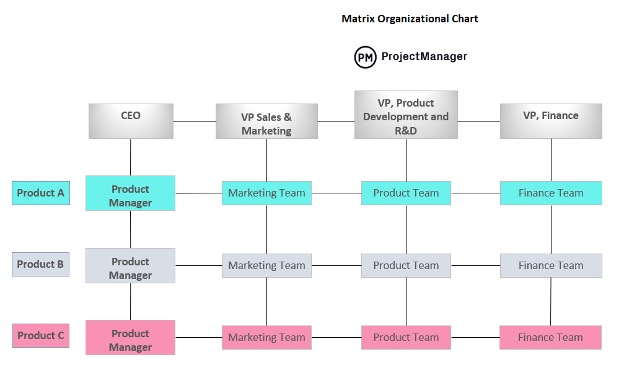
In a matrix structure, employees report to two managers – a functional manager and a project or product manager. For example, a designer might report to the Creative Head and also to a Project Manager for a specific client account.
This structure works well for project-driven businesses – consulting firms, IT companies, advertising agencies.
It is powerful but complex. It requires very clear role definitions and strong communication. In Indian SMEs where role clarity is already a challenge, a matrix structure can create more confusion than it solves unless implemented carefully.
Which Structure is Right for Your SME – A Stage-by-Stage Guide
There is no single right answer. The best structure depends on your size, stage, and business model.
Under ₹5 Crore turnover, team of 5–20: A flat structure works. Keep it simple. Focus on building trust and defining basic roles. Do not over-engineer at this stage.
₹5–25 Crore turnover, team of 20–60: Move to a functional structure. Define your departments. Hire or promote department heads. Push decision-making down from the founder level.
₹25–100 Crore turnover, team of 60–200: Strengthen the functional structure with clear reporting lines and performance accountability. Consider divisional structure if you have multiple product lines or geographies.
Above ₹100 Crore: You need a professional management layer – a leadership team that runs the business independently. The founder shifts from operator to strategist.
Warning Signs Your Current Structure is Holding You Back
Watch these signals. They tell you your structure has stopped working.
Every decision – big or small – lands on your desk. This means authority has not been delegated effectively.
Departments do not talk to each other. Projects get delayed because no one owns cross-functional coordination.
Employees are not sure who their real manager is. Dual reporting without clarity creates confusion and conflict.
Your best people are leaving. High performers leave businesses that feel chaotic and directionless. Structure gives them confidence in the company’s future.
You are working 14-hour days and the business still feels out of control. This is the clearest signal. You are compensating for a missing structure with personal effort.
How to Redesign Your Organisational Structure – Practically
Redesigning your structure does not require a management consultant and six months of workshops. Here is a practical starting point.
-
- Draw your current structure on paper. Who reports to whom today? Be honest about what is actually happening, not what you wish was happening.
-
- Identify the bottlenecks. Where do decisions slow down? Where is accountability unclear?
-
- Define the structure you need for your next stage of growth – not your current stage. Build slightly ahead of where you are.
-
- Redefine roles and reporting lines. Have honest conversations with your team leads about their expanded responsibilities.
-
- Implement gradually. Structural changes cause anxiety. Communicate the why clearly. Give people time to adjust.
-
- Review in six months. A new structure needs time to bed in. But it also needs to be checked and adjusted based on what is working.
OCG EXPERT INSIGHT: In our work with Indian SMEs, the most common structural mistake is the founder remaining the de facto head of every department well past the point where the business has outgrown that model. Restructuring is not about removing yourself from the business. It is about repositioning yourself to lead it strategically rather than operationally. That shift is what unlocks the next level of growth.
REAL EXAMPLE FROM OCG: One of OneWill Consulting Group’s most impactful engagements involved working with Jindal Group on a 100% automation and structural redesign project. A key part of that transformation was redefining reporting structures, decision-making authority, and departmental accountability. When the organisational structure was aligned to the business’s actual scale and ambitions, operational efficiency improved dramatically – and leadership could finally focus on growth rather than firefighting.
Conclusion – Structure is Strategy
Your organisational structure is not an HR document. It is a strategic decision that affects every part of your business – speed, accountability, culture, and growth. The right structure for your SME today may not be the right structure in two years. Revisit it as you scale. Build it deliberately. The businesses that grow fastest are not the ones with the best products or the most funding. They are the ones that are organised to execute.